What makes us human?
An interdisciplinary, two-part workshop on the nature and value of humankind in collaboration with the Martin Buber Society of Fellows in the Humanities and Social Sciences in Jerusalem took place in December 2024 at the Zukunftskolleg and in May 2025 online.
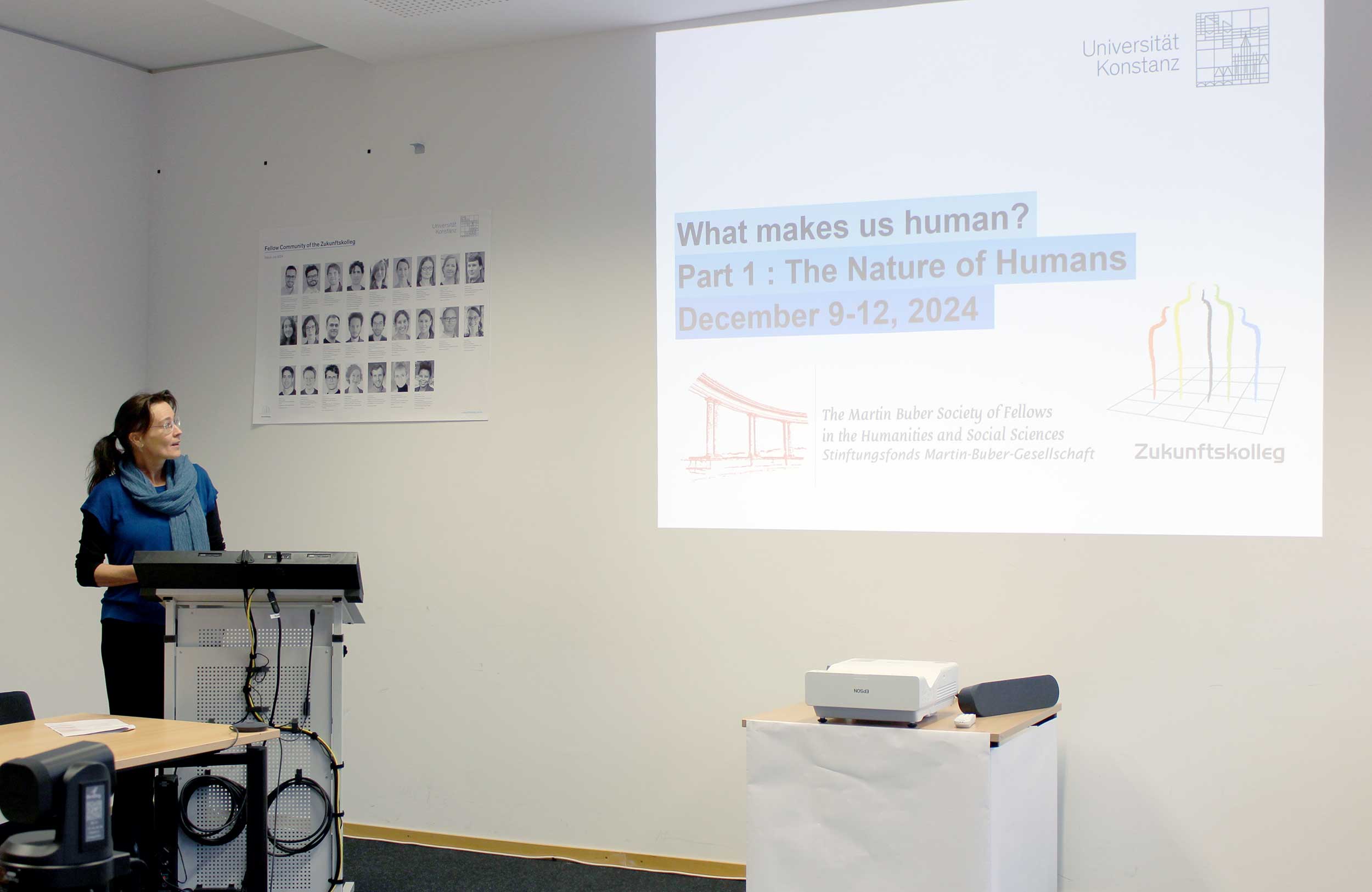
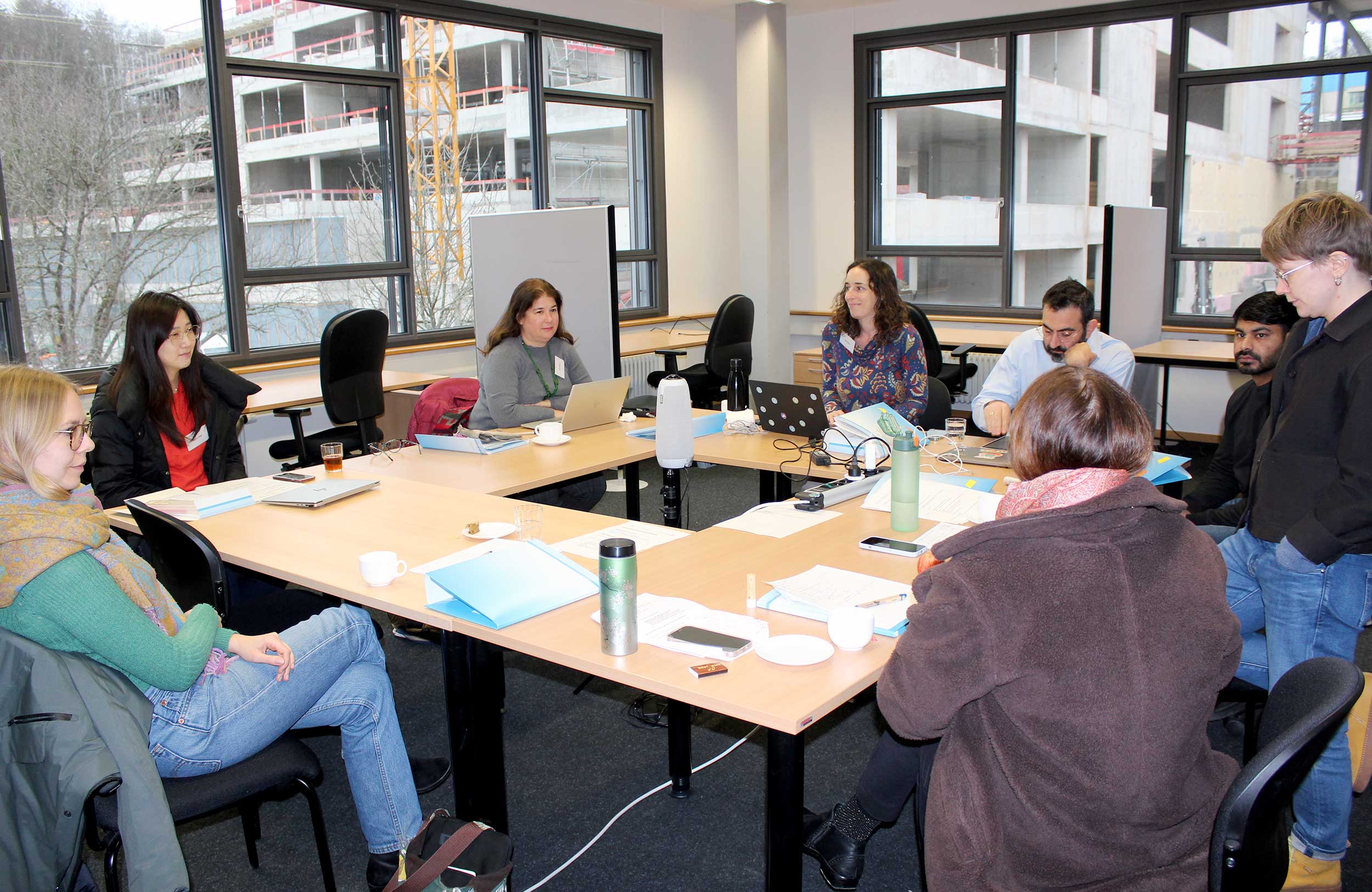
The aim of the workshop was to leverage the disciplinary diversity of the Zukunftskolleg and the Martin Buber Society of Fellows in the Humanities and Social Sciences to address the complexity of human nature and value. Invited experts introduced central themes of novel research and questions on this topic across disciplines. Participants formed interdisciplinary groups to collaboratively tackle specific questions concerning the nature and value of humankind.
About the topic
Humanity has long grappled with fundamental questions concerning its own nature and value. What characterizes human beings? Are there any human characteristics that remain consistent throughout history? If so, what are they? If not, how do current human beings differ from their ancestors and descendants? Can we know what the human being is before it has completed its historical development? What will the human being become? Can technology and societal developments change what it means to be human and perhaps radically transform its own nature? In contemporary times, these questions have gained urgency and relevance due to technological developments in artificial intelligence and human enhancement, as well as findings in various disciplines regarding the sophisticated cognitive and emotional capacities of non-human animals.
The first part of the workshop (10-12 December in Konstanz) was dedicated to the topic “The Nature of Humans”. There were three different working groups:
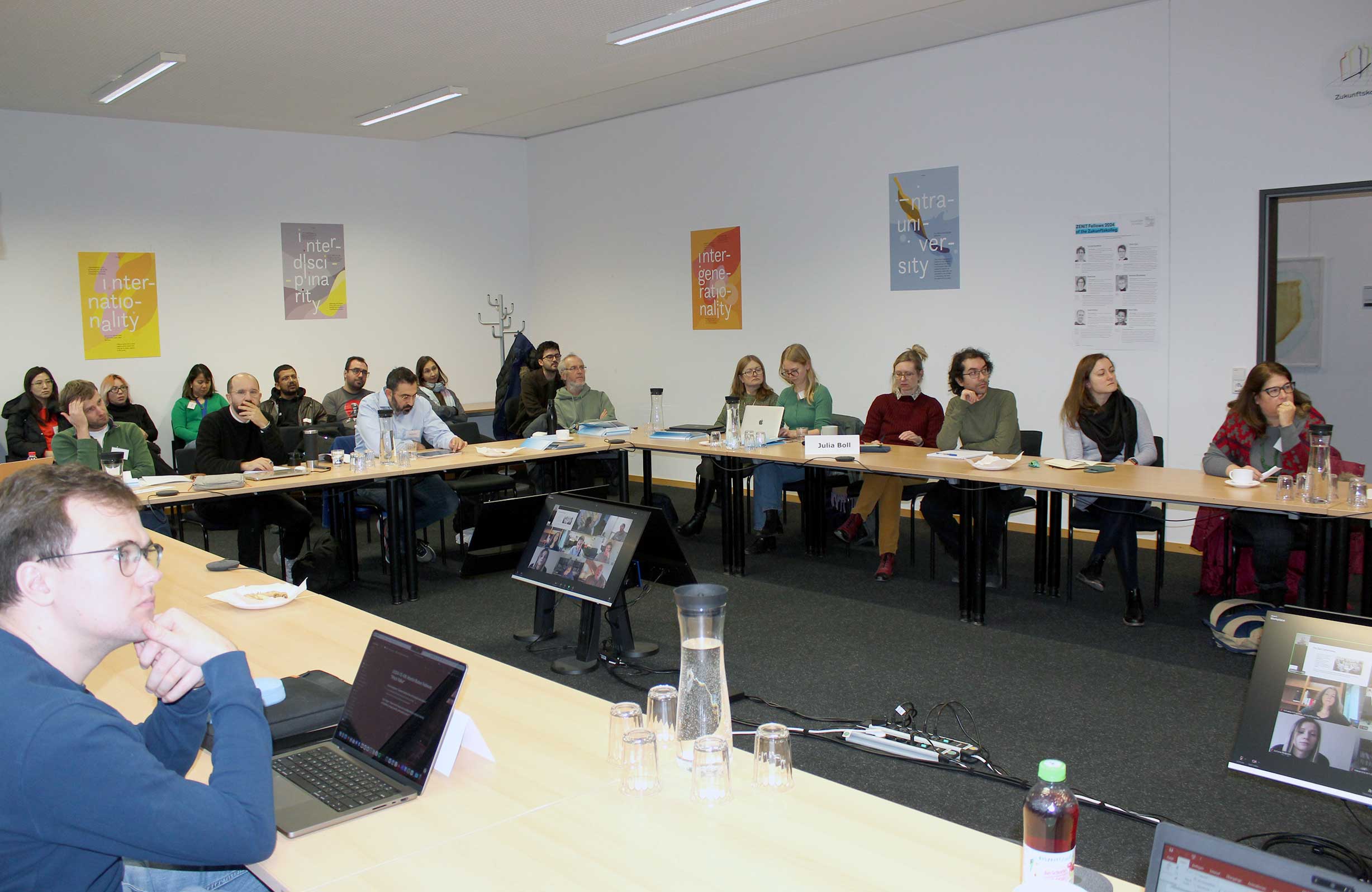
1. Humans & Primates
This working group explored the nature of the human being through the lenses of evolutionary biology and primatology:
Philosophers since antiquity have sought to define what distinguishes humans from other animals. Pythagoras, for instance, described humans as “number 2,” meaning “a biped animal”. Aware that birds are also bipeds, Plato (followed by Aristotle) refined this definition to “a featherless biped”. Diogenes of Sinope famously challenged Plato by presenting a plucked chicken, leading to the revised definition of humans as “broad-nailed featherless bipeds”.
Contemporary evolutionary biologists similarly identify bipedalism as the defining trait of humans among primates. While many primates are facultative bipeds − capable of walking on two legs for short distances − humans are unique as obligate bipeds. Key anatomical adaptations, including arched feet, non-opposable big toes, elongated hind limbs, a double S-shaped spine and a shortened, widened pelvis, enable humans to maintain upright posture. In addition, the centrally located foramen magnum supports the vertical alignment of the skull.
The panel also addressed a critical question: Do contemporary findings in evolutionary biology echo the insights of ancient Greek philosophers? Did the Greeks, in their attempts to define humanity, anticipate modern biological understanding? Or has the scientific definition of human uniqueness significantly advanced since antiquity?
Coordinator: Benjamin Wilck, Jerusalem
2. Humans & Rationality
It has been an old age idea that rationality makes humans “special” ever since René Descartes, the first rationalist of modernity, laid the foundation for this belief.
The working group aimed to question this belief and delineate recent work in natural sciences that tackles the limits of rationality. The following questions were addressed:
- How is “rationality” defined and how has its normative definition evolved from early modernity till today?
- Is rationality an essential feature of the evolutionary history of homo sapiens?
- How did rationality as an epistemological framework give rise to homo economicus?
- What are the limits of rationality in the light of recent research on bounded rationality?
- What are the cultural predeterminants of “rationality” or is it a universal innate pre-determinate cognitive mechanism?
- What can the emerging field of “neuroeconomics” tell us about human rationality?
Coordinator: Ahmed El Hady, Konstanz
3. Humans & Society
This topic was of interest, for example, for scholars of psychology, sociology and anthropology who like to work on contemporary and future conflicts and challenges confronting humans. Pandemics, climate change, wars and armed conflicts are just some of the buzzwords used to describe the social environments we currently face. Global crises create a new psychological context that threatens the integrity of our self-model and mental health.
Sub-topic “Suffering and hope in the human condition”
In current times of war, we are reminded of the twofold impact of collective trauma on the individual and society: suffering and pain as well as resilience and hope. By understanding trauma as a travelling concept throughout different disciplines, the working group could focus on certain elements, such as the sense of time in depressive states versus hopeful states / how to cultivate a normative, “intellectually honest” concept of humanity against de-humanizing tendencies / consistencies and values attached to suffering / etc.
Sub-topic “The 'Man' in ‘Humanity’"
In what ways was the concept of “humanity” mobilized to advance gendered perspectives (for instance of men as superior to women)? More broadly, what power relations were, and still are, implicated in the notion of “humanity?” That is, what ideologies and politics inform concepts of humanity and how are these still refractured in current social and academic life. In addition, this subgroup broadened their discussion to power relations and “feminizing” non-white populations.
Coordinator: Jasmin Spiegel, Jerusalem
4. Humans & Technology
This working group explored the relationship between humans and technology. The possible topics of inquiry followed two axes:
First, how do humans relate to technology and is it different from how they relate to nature? Will certain kinds of technological artifacts, and certain ways of engaging with technology, supplant our conception of what it means to be human? The development of more sophisticated AI raises the question of whether any such application will successfully produce something sufficiently agent-like to deserve moral consideration. If it does not, why not? But if so, on what grounds? “Speciesism” is the view that members of one’s own species are more morally important than members of other species, simply because of common species membership. Speciesism is controversial, with some claiming it is natural and innocuous, and others denouncing it as reprehensible. Is this practice justifiable, and how does the possibility of artificial entities with some kind of moral status impact the debate?
Second, humans have been the beneficiaries of many kinds of enhancements − paradigmatically, in medicine. Optimists about the scale and pace of technological developments have predicted that soon we will benefit from enhancements that promise to give us “superhuman” physical and cognitive abilities. Are such enhancements advisable? What would we stand to gain or lose by enhancing to such a degree? Are there enhancements we should refrain from, on pain of giving up an important component of our humanity? How do we envision the “post-human”? Should biological and genetic human modification be used to transcend the limits of what it is to be “human”? Is the “singularity” hypothesis a plausible trajectory for trans-humanism?
Coordinator: Daniela Skibra, Konstanz
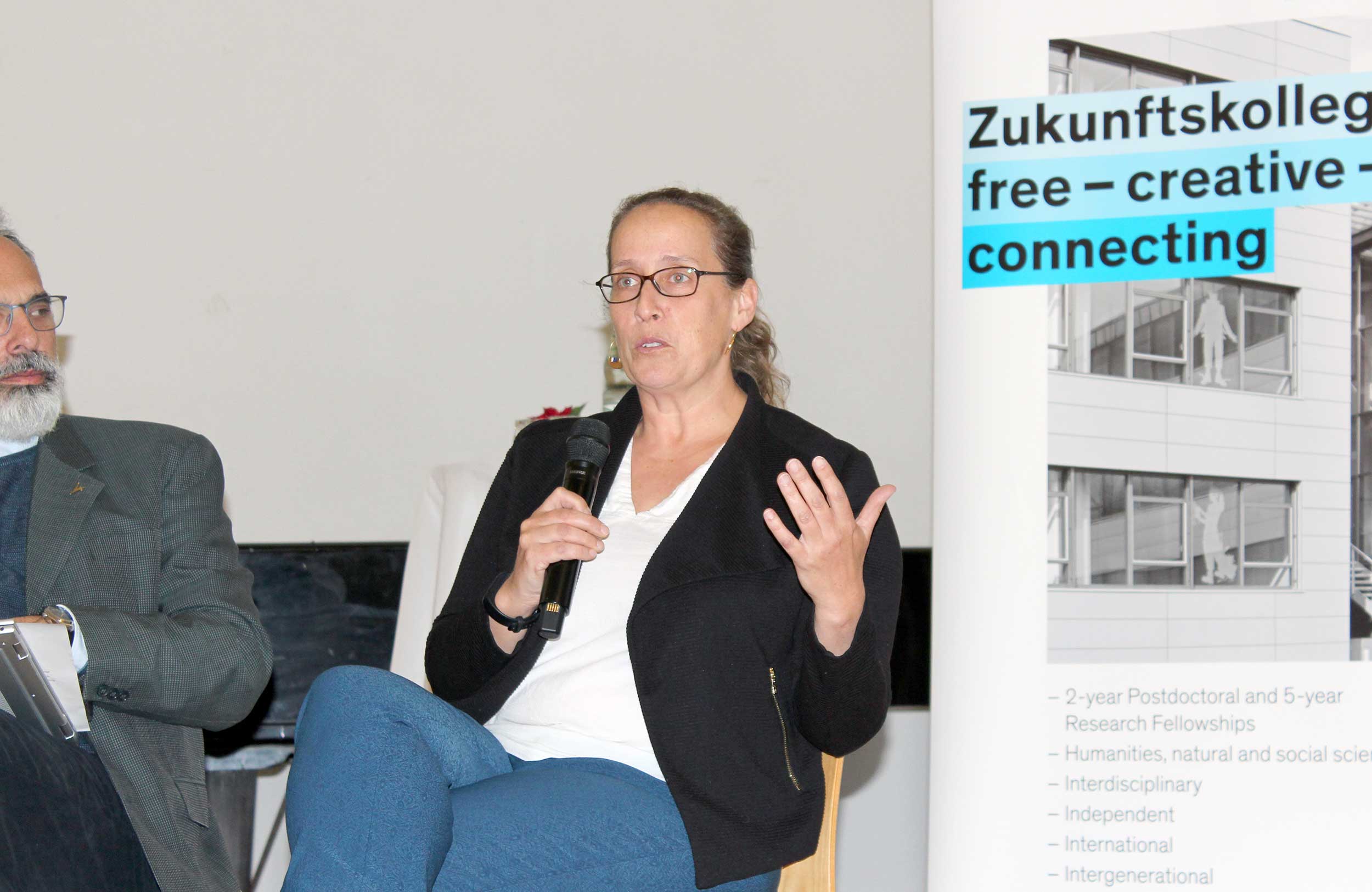
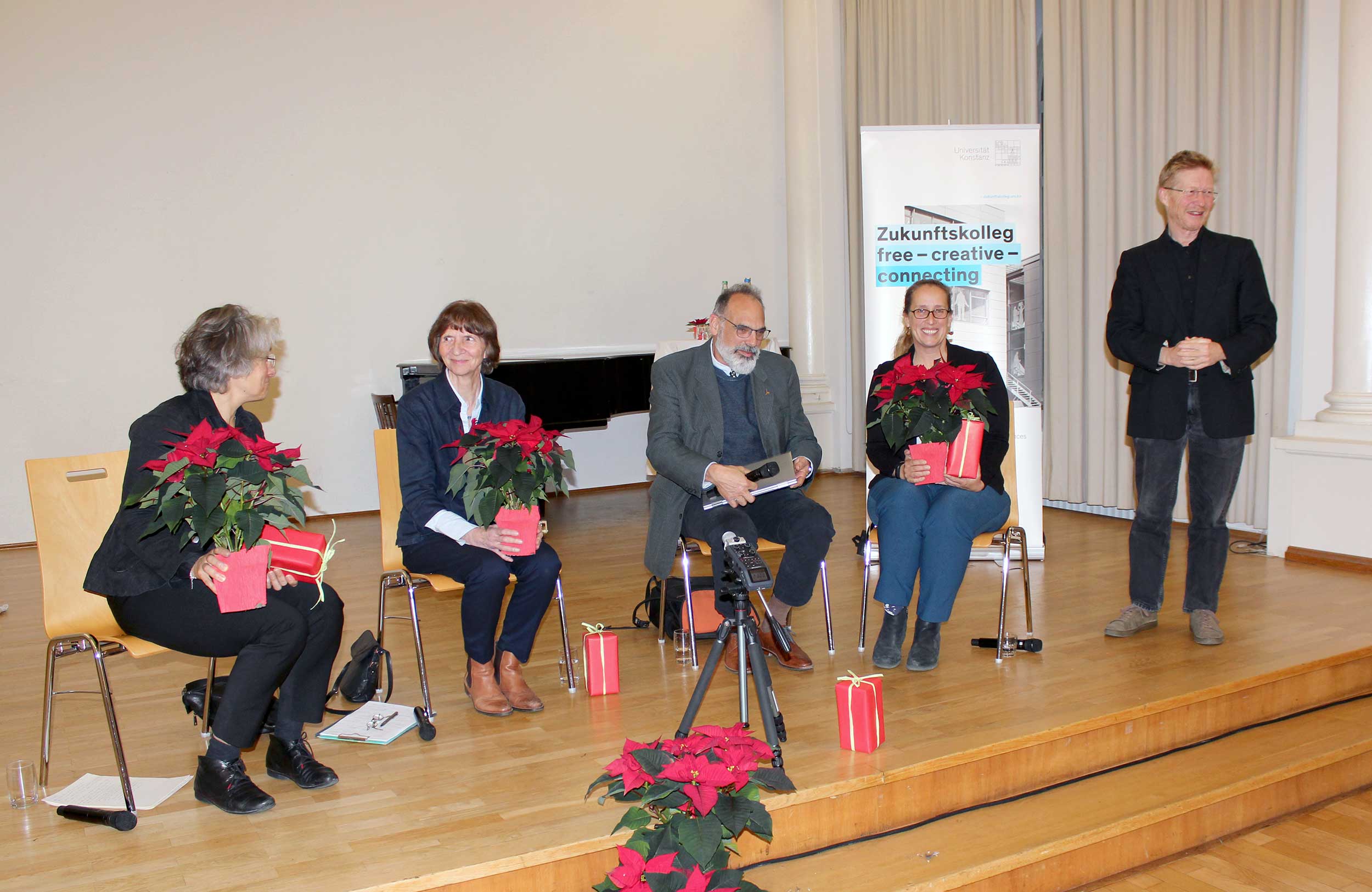
In the framework of the workshop, a public panel discussion entitled “What makes us human?” took place in the Bürgersaal of the City of Konstanz.
The panel brought together international experts from both the natural sciences and the humanities to explore these issues in an interdisciplinary dialogue.
Speakers
- Aleida Assmann (Cultural Historian, University of Konstanz)
- Meg Crofoot (Biologist, University of Konstanz / Max Planck Institute of Animal Behavior)
- Nadia Mazouz (Philosopher, ETH Zurich)
Moderation: Raz Chen-Morris (Martin Buber Society)
Workshop Part 2 in May
The second part of the collaborative workshop with the Martin Buber Society of Fellows in the Humanities and Social Sciences in Jerusalem entitled “What makes us human?” took place online on 5 and 6 May 2025.
A talk by David Shulman on “Being a South-Asian Human Being” started the academic exchange and opened the discourse beyond escapism. He said that “to be human” includes empathy, ignorance, self-doubt, introspection – and to be a witness as a non-violent activist.
The afternoon was dedicated to an open panel with Rakefet Ackerman, Oded Naaman and Nir Feinberg about the “Value of Humanity”. For all participants, it was not an easy thing to talk about humanity and its value in the context of the current situation in Israel and Gaza, amidst a widespread sense of scepticism and expressions of despair.
Based on the first part of the workshop in December 2024 in Konstanz, three working groups – Humans & Primates, Humans & Society and Humans & Rationality – met online to continue working on an overview of “Rationality” in different disciplines and in humans vs. primates, as well as on “Vulnerability” as a social aspect of being human. Several publications are in preparation to ensure widespread dissemination of the results.