Broadening horizons
Staff exchanges in Konstanz and Dublin
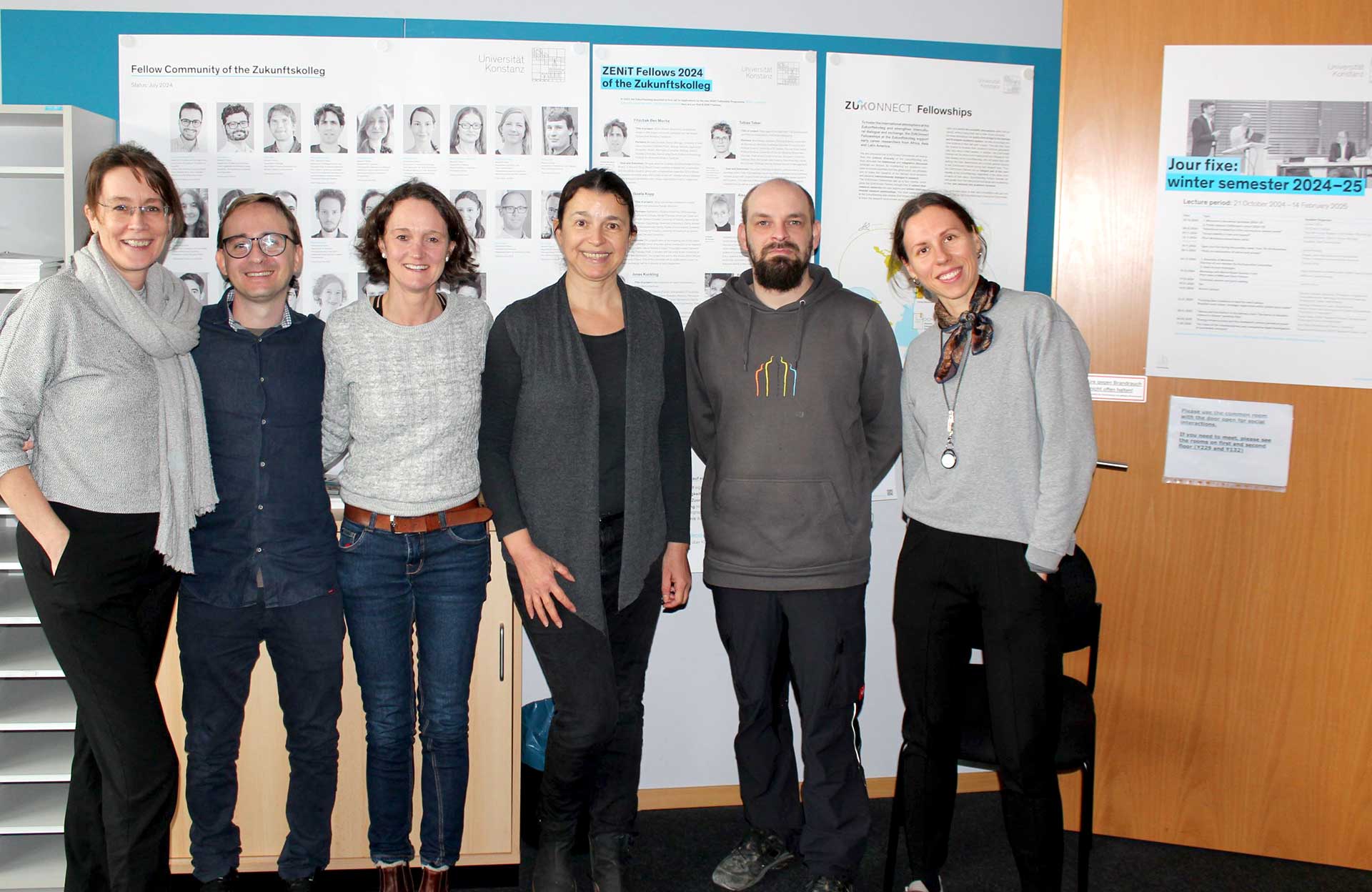
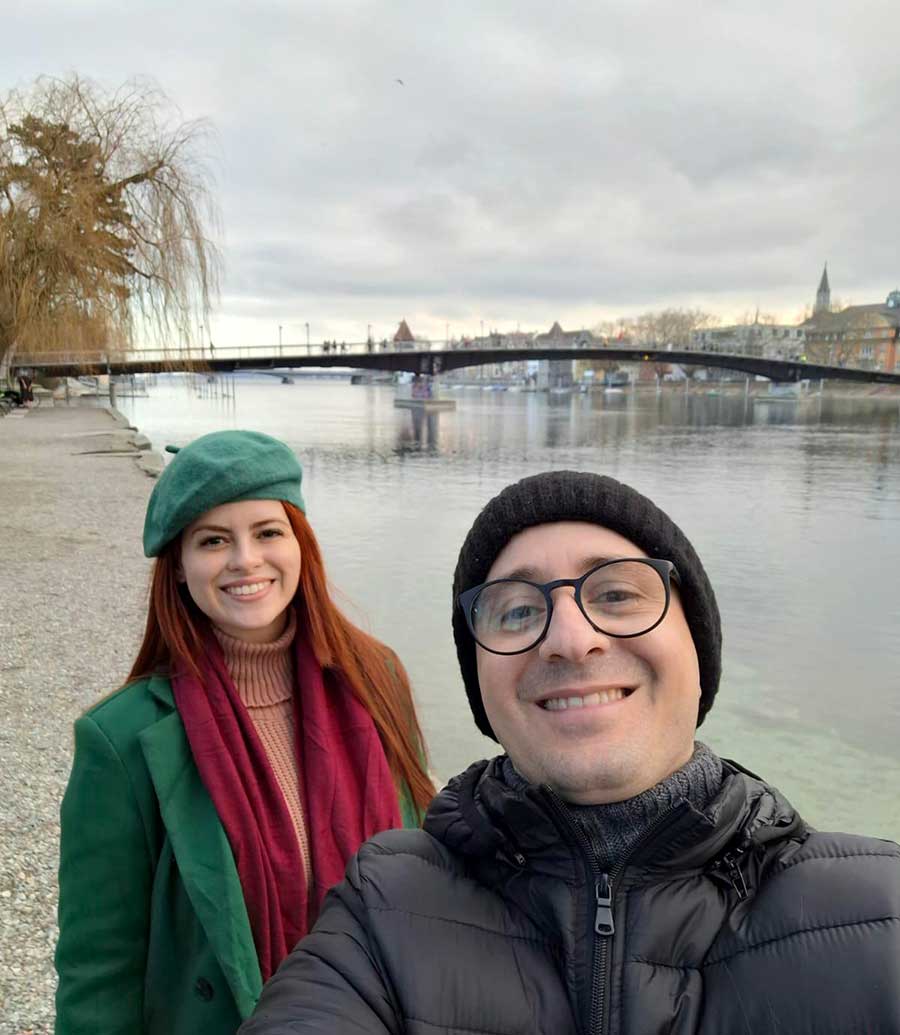
Fabio Amaral de Oliveira Paes – Communication Advisor at the Institute for Advanced Transdisciplinary Studies (IEAT) of the Federal University of Minas Gerais, Belo Horizonte, Brazil – spent four weeks at the Zukunftskolleg to learn more about an institute of advanced study in Europe. Mihaela Mihaylova went to the Trinity Long Room Hub and visited the Institute for Discovery at University College Dublin.
Both report here about their experiences:
1. Fabio Amaral de Oliveira Paes
Between 15 January and 14 February 2025, I was in Konstanz for a one-month work exchange at the Zukunftskolleg (ZuKo). The first word that comes to mind when I think of this experience is: AMAZING! It was incredible to get to know Konstanz – its beautiful lake and landscape – and to have such a meaningful learning experience with the ZuKo team, who welcomed me so warmly: Renate Krüßmann, Sigrid Elmer, Mihaela Mihaylova, Laura Dirmaite, Michael Krauße, and Giovanni Galizia, the director of the institute.
Accompanied by my wife, Geslaine Paes, I stayed at the University of Konstanz’s guest house overlooking the beautiful Seerhein River. For four weeks, despite the persistent fog, I walked to the bus station on my way to the university, absorbing the charm of the city and watching the people crossing the streets on their bicycles.
My work with the ZuKo team began with a tour of the University of Konstanz’s campus, including visits to the main facilities and a meeting with Renate Krüßmann, Programme Director for Internationalization at the Zukunftskolleg. Over the course of the four weeks, I had several one-on-one meetings with staff members, each with a specific focus: Laura Dirmaite (administration, events, room organization, financial management), Mihaela Mihaylova (support for fellows, funding instruments and institutional committee operations) and Sigrid Elmer (communication and public relations). I must also mention the technical support provided by Michael Krauße.
The visit to the Zukunftskolleg was extremely productive, both in terms of exchanging experiences in working practices and project development and in terms of learning a new language. During the first two weeks, I took an intensive German course with Waltraut Bauersachs, a very charismatic teacher. The course gave me an introduction to the German language and an opportunity to interact with classmates from different countries.
I believe that these meetings were fundamental in understanding how the ZuKo works and in recognizing the potential of projects aimed at supporting early career researchers. This understanding gave me valuable insights into the strategies and processes in place, especially considering that the ZuKo is a cornerstone in the University of Konstanz’s institutional strategy to promote top-level research. This was particularly relevant, as the Institute for Advanced Transdisciplinary Studies (IEAT) at the Federal University of Minas Gerais (UFMG) in Belo Horizonte, Brazil, has launched a new programme to support early career researchers through the implementation of long-term chairs.
During the visit, I also took part in a meeting with the working group “Early Career Researchers at IAS” composed of other institutes for advanced study within the University-Based Institutes for Advanced Study (UBIAS) network. Following this meeting, IEAT/UFMG was invited to join future gatherings of this working group.
I also had productive meetings with three ZuKo fellows: Pihal Deepak from India, and Eduardo Luersen and Henrique Almeida de Castro from Brazil. I had the opportunity to attend three research presentation events, known as Jour fixe, a mandatory activity for ZuKo fellows. In one of these sessions, I gave a presentation about IEAT/UFMG to the attendees. In the institute’s weekly staff meetings, held with the participation of the ZuKo’s director Giovanni Galizia and the entire team, I had another opportunity to present IEAT/UFMG in more detail, outlining the institute’s mission and programmes. I consider both moments to have been particularly valuable.
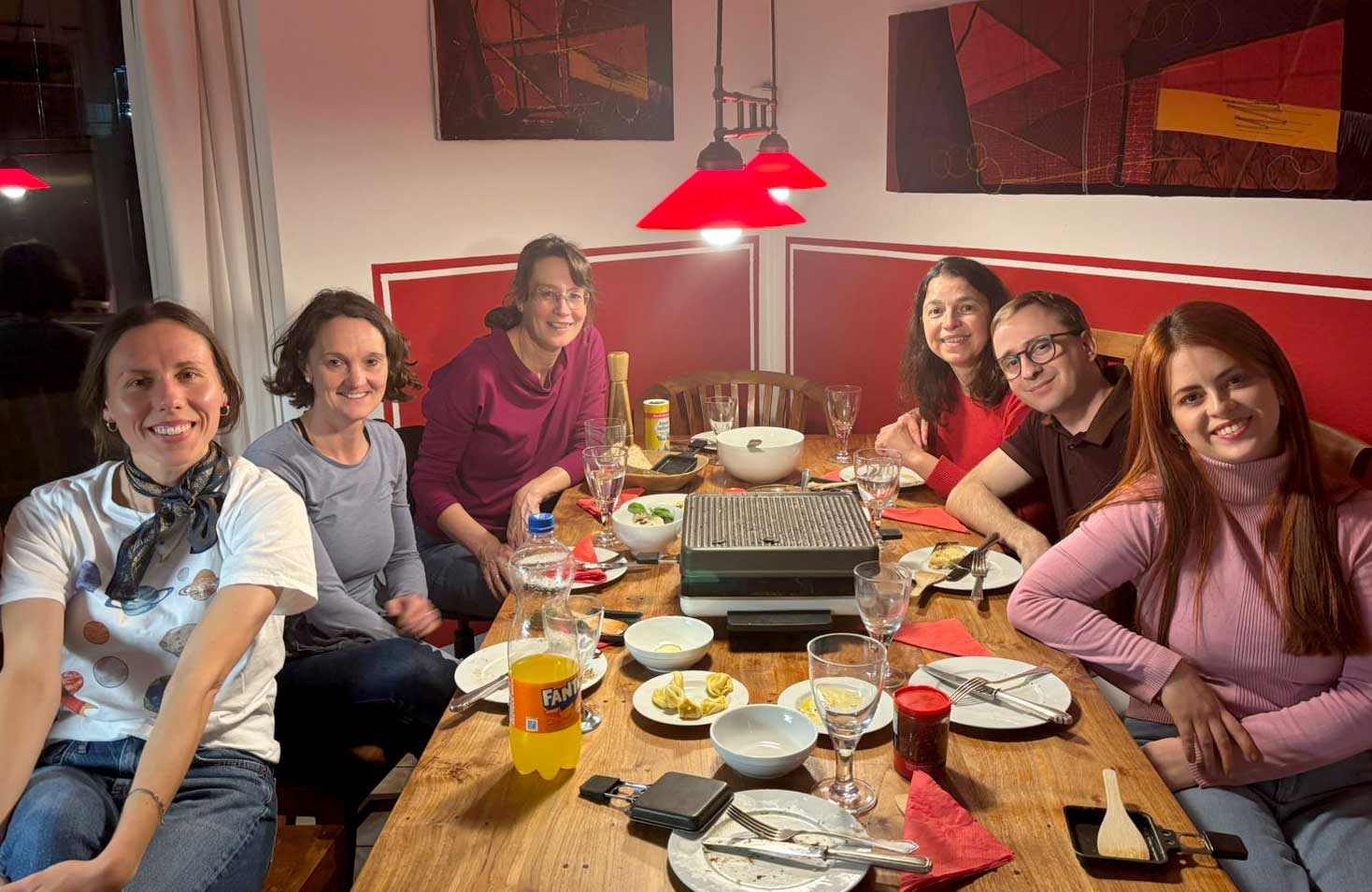
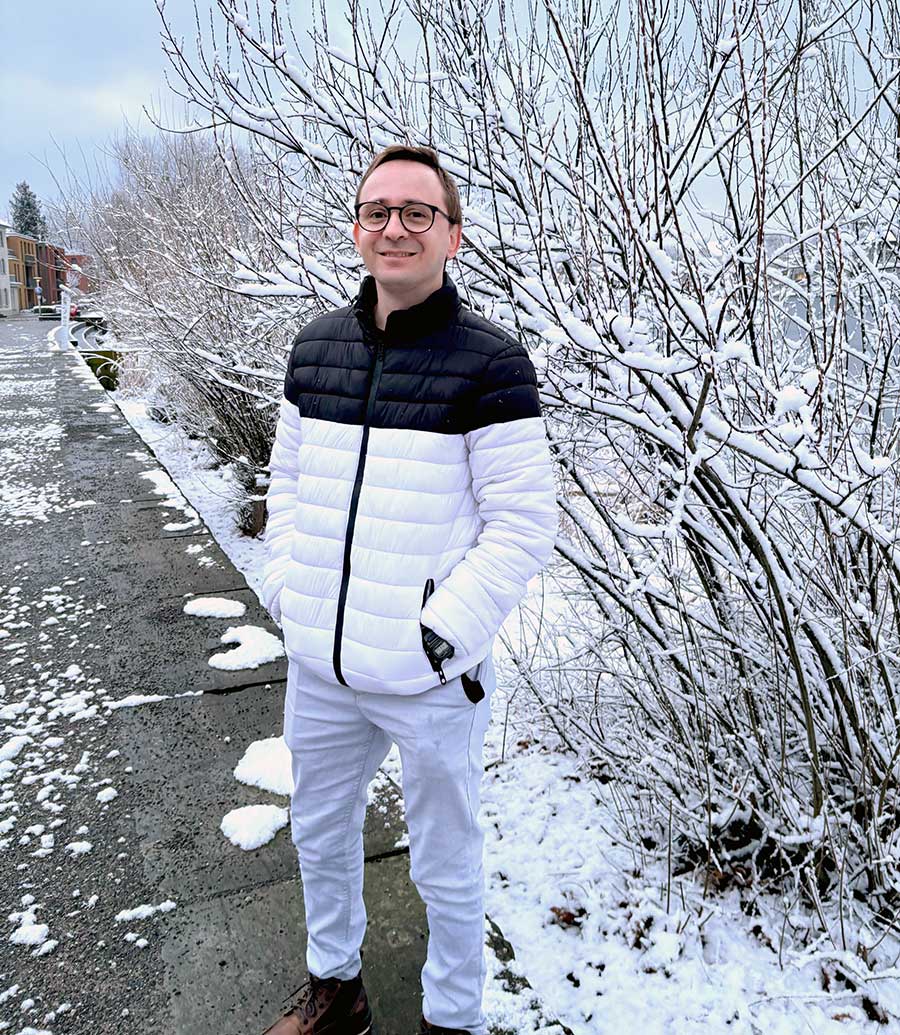
To conclude, I must mention two very memorable moments during my visit: the farewell dinner at Renate Krüßmann’s home with the ZuKo staff and the rare surprise on our last day in Konstanz: the stunning white landscape created by the snowfall during the night. It was amazing to see a bit of snow in Konstanz. On Friday, February 14, my wife, Geslaine Paes, and I woke up early to walk by the river and enjoy the beautiful snow-covered scenery. All these moments are deeply etched in my memory. My visit to Konstanz was incredibly enriching, enjoyable and highly productive. I am deeply grateful to the entire ZuKo team for their warm welcome and support throughout my stay.
2. Mihaela Mihaylova
From 9 to 13 December 2024, I had the privilege to be part of the life at the Long Room Hub (LRH) at Trinity College Dublin, Ireland. It began in the summer of 2024 when Jane Ohlmeyer, a member of the Zukunftskolleg’s Scientific Advisory Board (SAB), invited me to visit the LRH and exchange ideas with the staff there. Thanks to the financial support of (1) Erasmus+ Staff Mobility at the University of Konstanz and (2) the Zukunftskolleg, I was able to accept this invitation and spend five inspirational days in Dublin. My host was the Trinity LRH (https://www.tcd.ie/trinitylongroomhub/) – a research institute for the arts and humanities. Over 20 disciplines are represented at the institute, including arts, religion, languages, literatures, cultural studies, linguistics, history, law, education, peace studies and classics, as well as University Library. The institute provides support for researchers at all career stages through its fellowships and public engagement programmes. Doctoral students supported by the institution form the largest part of the community.
During my stay, I was able to meet and exchange best practices with seven of the nine members of the institutional staff. My first day started with a warm welcome from Jane and the team, followed by a tour of the Long Room Hub and of Trinity College. During this tour, it was amazing to compare the traditional and historical Trinity College (first photo), which is the oldest and best ranked college in Ireland, founded by royal charter in 1592, with the modern LRH (second photo), founded in 2010 and located on Trinity College’s campus. Not only the buildings were different but also the institutions themselves: one standing for traditional college culture and the other for interdisciplinarity and informal research exchange within the generations.
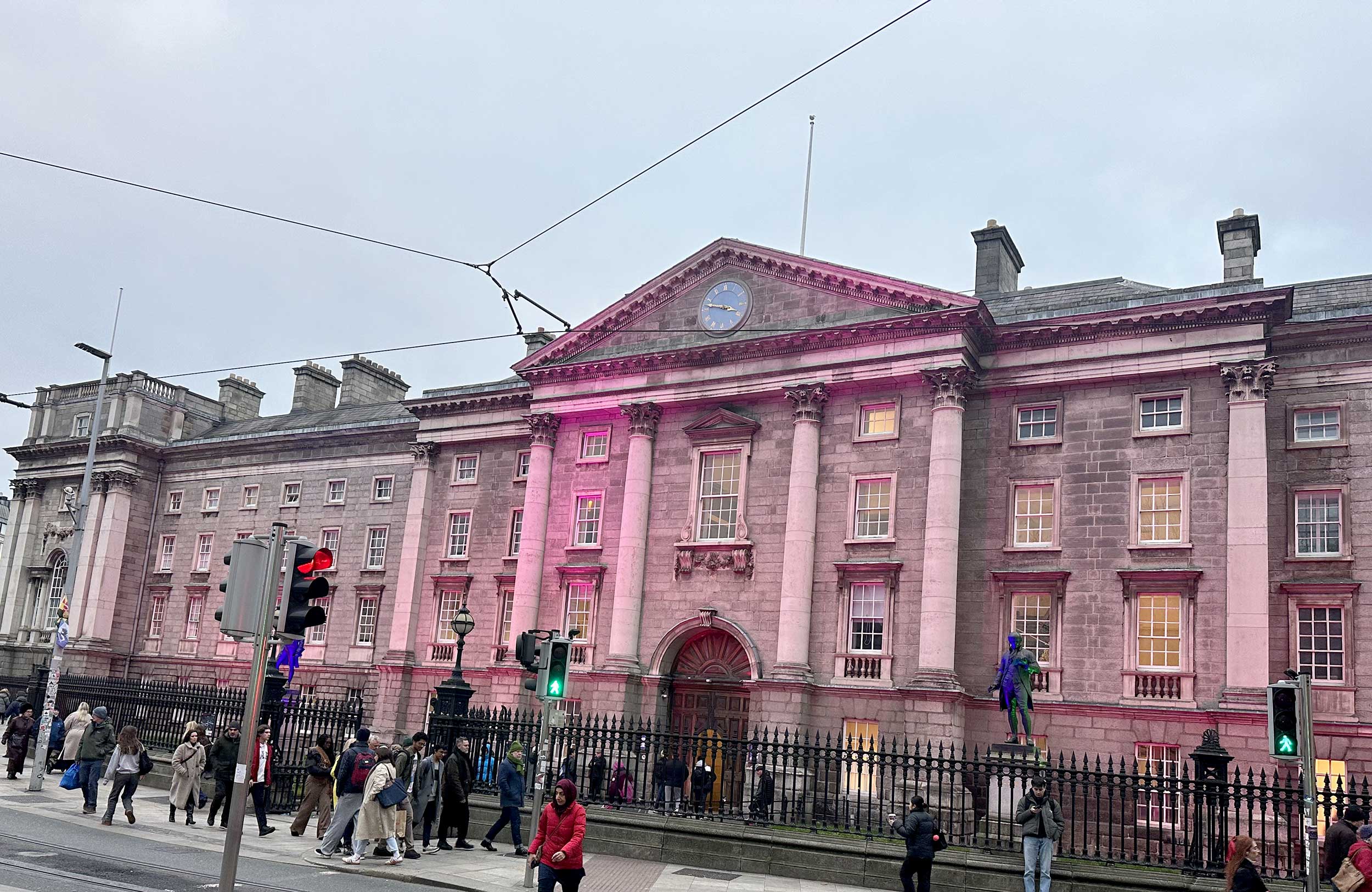
Main entrance of Trinity College Dublin
The tour was followed by a big surprise. Jane Ohlmeyer, who was at that time holding a meeting with researchers from her project “VOICES: Life and Death, War and Peace, c.1550-c.1700: Voices of Women in Early Modern Ireland”, funded by a European Research Council Advanced Grant, which she won in 2023, invited me to join the research group for Christmas Commons at Trinity College. During this traditional event in the Dining Hall, with Christmas dinner and carols provided by the College Chapel Choir, I had many interesting discussions with Jane and her team of established and international early career researchers. On the second day, I had a meeting with Professor Eve Patten, Director of the Trinity Long Room Hub. We discussed platforms to showcase the impact and centrality of arts and humanities-led research at the LRH and the different fellowships and support measures at the Zukunftskolleg. We compared the advantages and disadvantages for the work of our public relations representatives of being situated in the centre of the city, like Trinity LRH, or of being on campus outside the centre, like the Zukunftskolleg. After lunch, I met with Catriona Curtis, Executive Director of the Trinity Long Room Hub. During the meeting, we discussed the different programmes offered by our two institutions and talked about measures to improve the communication skills of early career researchers. We also discussed the implementation of the institutes’ research and public engagement programmes. Later that day, I met with Aoife King and Christina Hamilton from the Communications Team. In the afternoon, I attended an event in the Trinity LRH’s “Conversation” series, during which Clemens Ruthner discussed his recent publication “The Literary Fantastic, Liminality, and Cultural Economy”. The highlight of my stay in Dublin was my participation in the early career researchers’ event “Coffee Morning” (third photo), which took part on the third day of my visit. During “Coffee Morning”, I had the possibility to meet the heart of the institute – its community of early career researchers (mostly doctoral students) and other researchers in different career stages. I learnt a lot about their projects and interests and had the possibility to present the Zukunftskolleg and its programmes as well as the University of Konstanz and its departments.
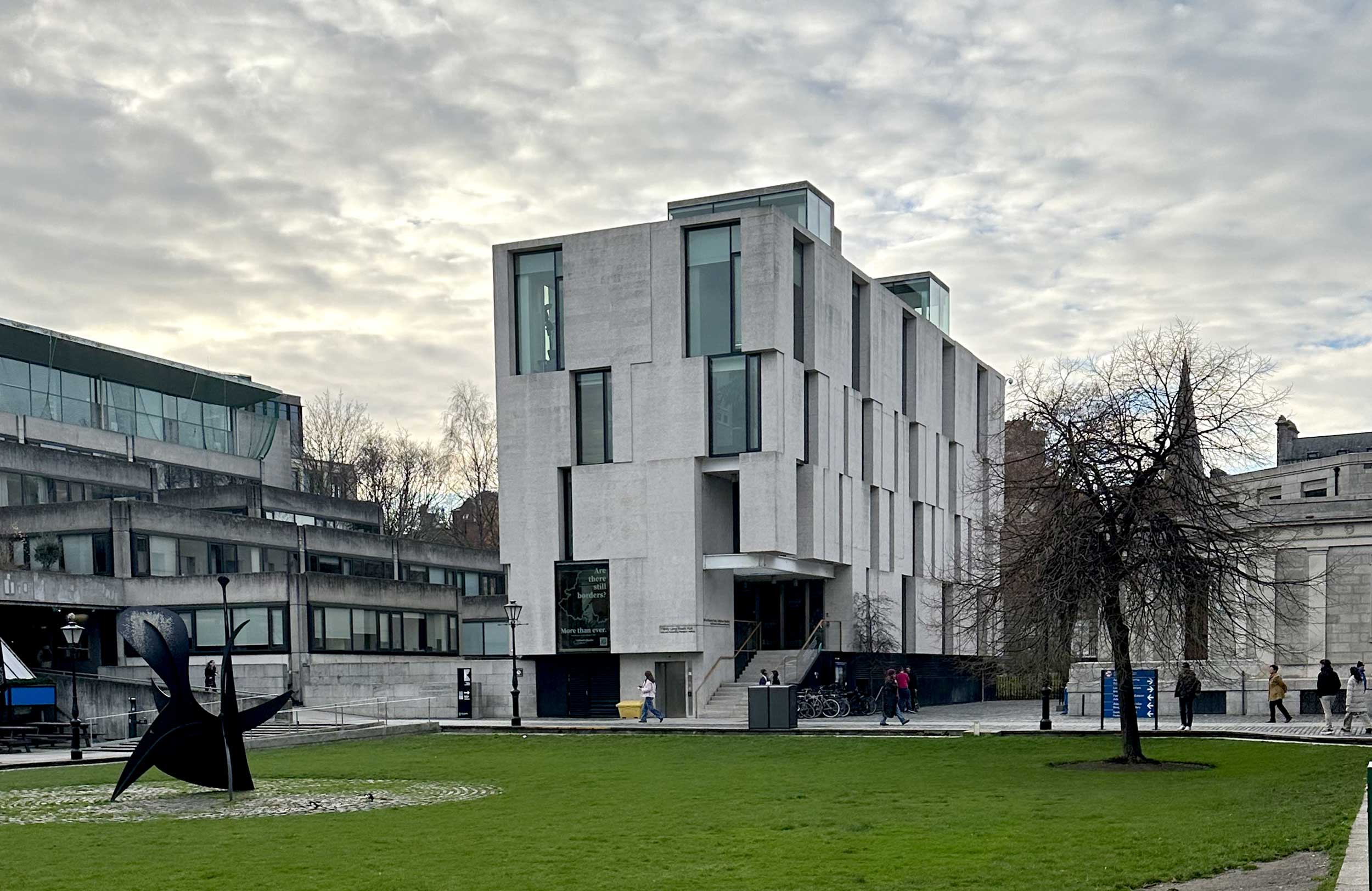
Trinity Long Room Hub
Later that day, I met with Dr Emily Johnson, Research Fellow at the Trinity LRH. During our meeting, we had an inspirational conversation about research impact. In the evening, I attended the early career researchers’ event with panel discussions and the discussion “Behind the Headlines” in partnership with Boston College on putting the humane into humanitarianism. On my fourth day, I met with Jane Ohlmeyer, former director of the Trinity LRH and a member of Zukunftskolleg’s Scientific Advisory Board. During our meeting, we discussed the Zukunftskolleg’s progress since Jane’s last visit to Konstanz several months ago. We also shared our impressions of how similar the atmosphere at the LRH and the Zukunftskolleg is. Later I met with Maureen Burgess, Research Programme Officer at the Trinity LRH, and discussed different funding instruments and funding institutions in Ireland, as well as strategies to help early career researchers apply for competitive grants such as those of the ERC. We also discussed the support offered by both institutions for early career researchers in identifying and applying for research funding. In the afternoon, I visited the Institute for Discovery (https://www.ucd.ie/discovery/) at University College Dublin, where I met with the institute’s manager, Tara Byrne, its director, Patricia Maguire, and the engagement manager, Elva O’Sullivan as well as with several researchers. The Institute for Discovery provides expertise and support for emerging and early-stage international research at University College Dublin and fosters interdisciplinarity. A lot of interesting and inspirational discussions took place during the afternoon and the evening, when there was a Christmas party. My last day at Trinity College started at the LRH with a meeting with Rike Held – Events Support Officer. Unfortunately, the planned meeting with Eva Muhlhause, Accounts Project Officer at the Trinity LRH, during which a discussion about our experience in the area of fellowships, grant support and counselling in financial matters had been foreseen, was unable to take place, as Eva had a last-minute change of plans. In the late afternoon, we were all sad to say goodbye to each other (fourth photo). We talked about future visits by members of staff of the Trinity LRH to the Zukunftskolleg within the Erasmus+ programme.
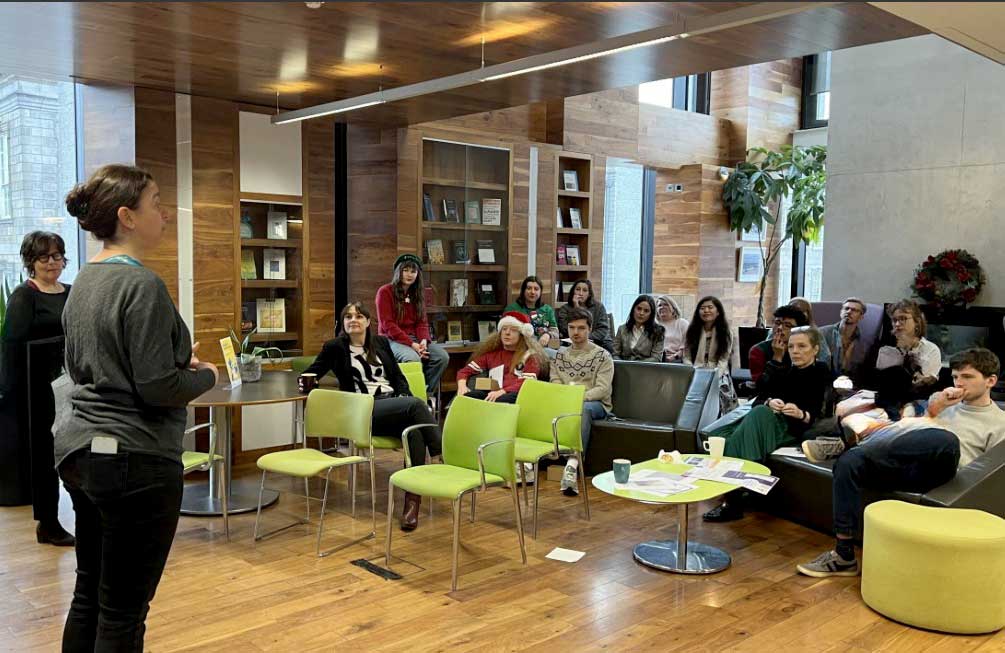
“Coffee Morning” event with the early career researchers at the Hub
What fascinated me most during my stay in Dublin was how similar the Trinity LRH and the Zukunftskolleg are, although we are situated in different parts of Europe, have different cultures, support researchers in different career stages and face different challenges. What makes us similar is the international, interdisciplinary, vibrant and enthusiastic community and especially our family-like atmosphere of feeling at home, regardless of which part of the world we come from and in which career stage our fellows are.
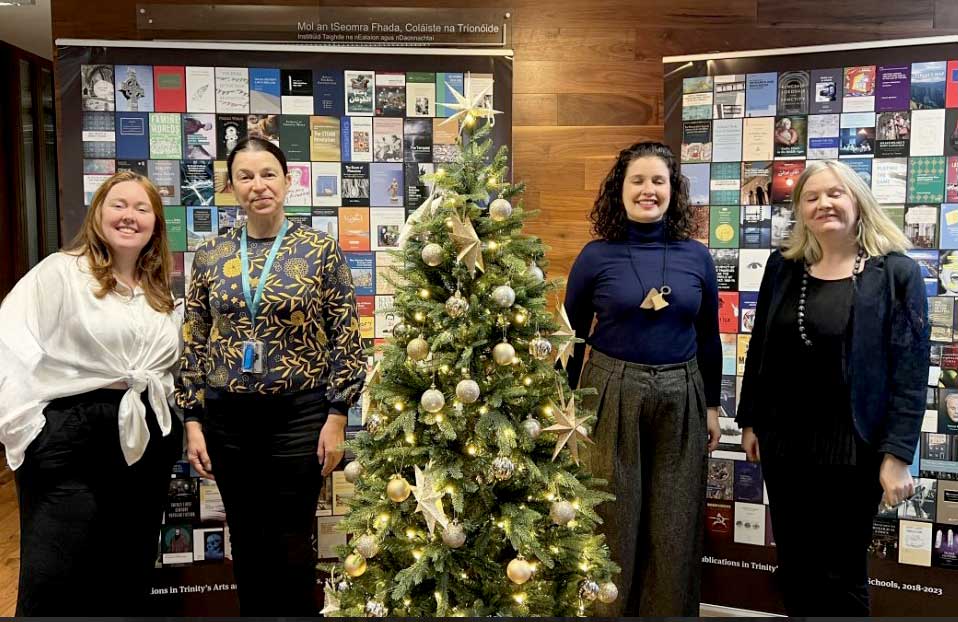
Fond farewell