Exploring Nature Around the World
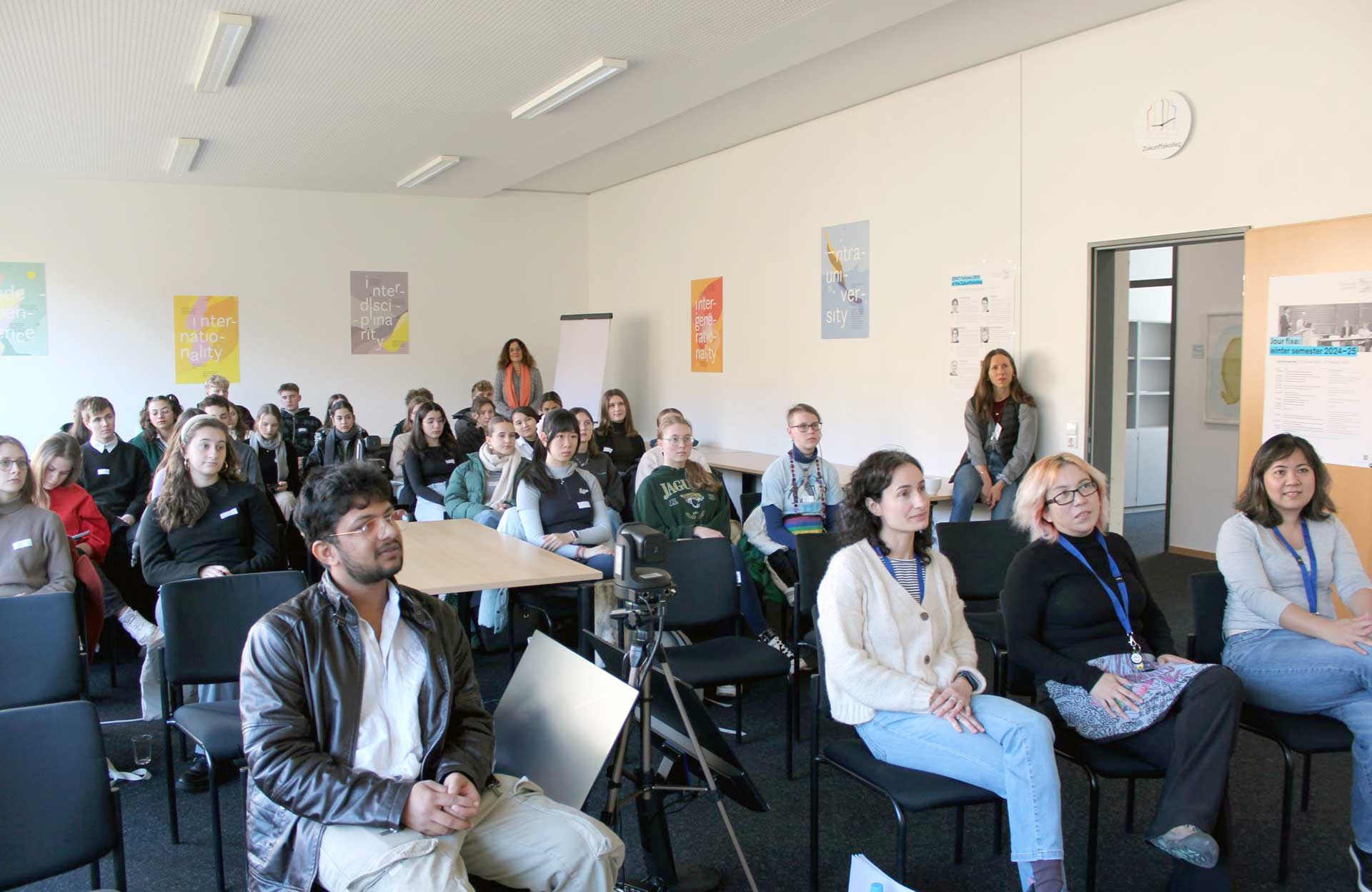
On 15 November 2024, the Zukunftskolleg organized a University Day in collaboration with the Hegau Bodensee Seminar entitled “Exploring Nature Around the World”.
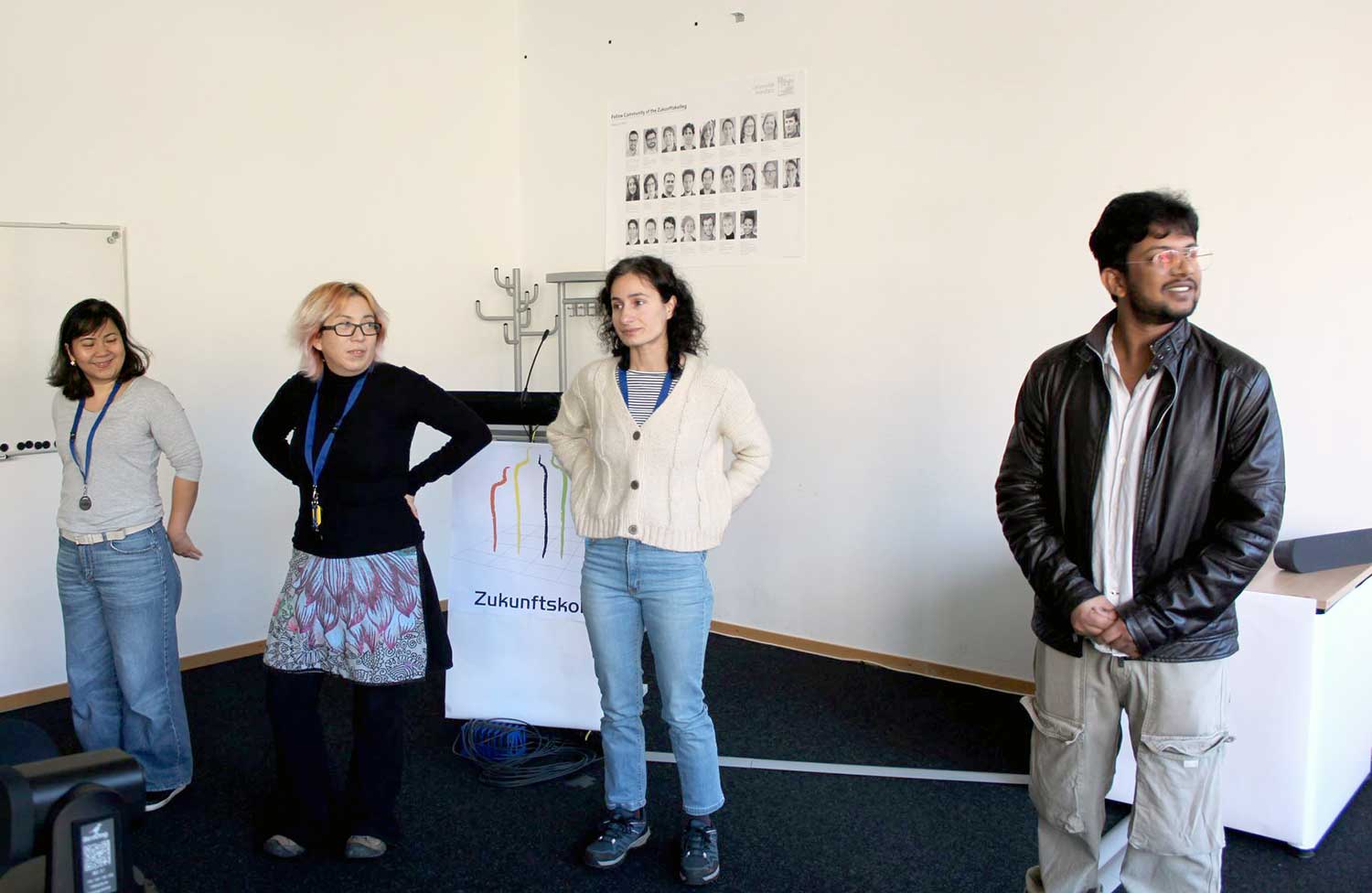
Three ZUKOnnect Fellows from different disciplines ran workshops and interacted with pupils of the Hegau Bodensee Seminar (aged 16-18) to share their fascination for nature around the world.
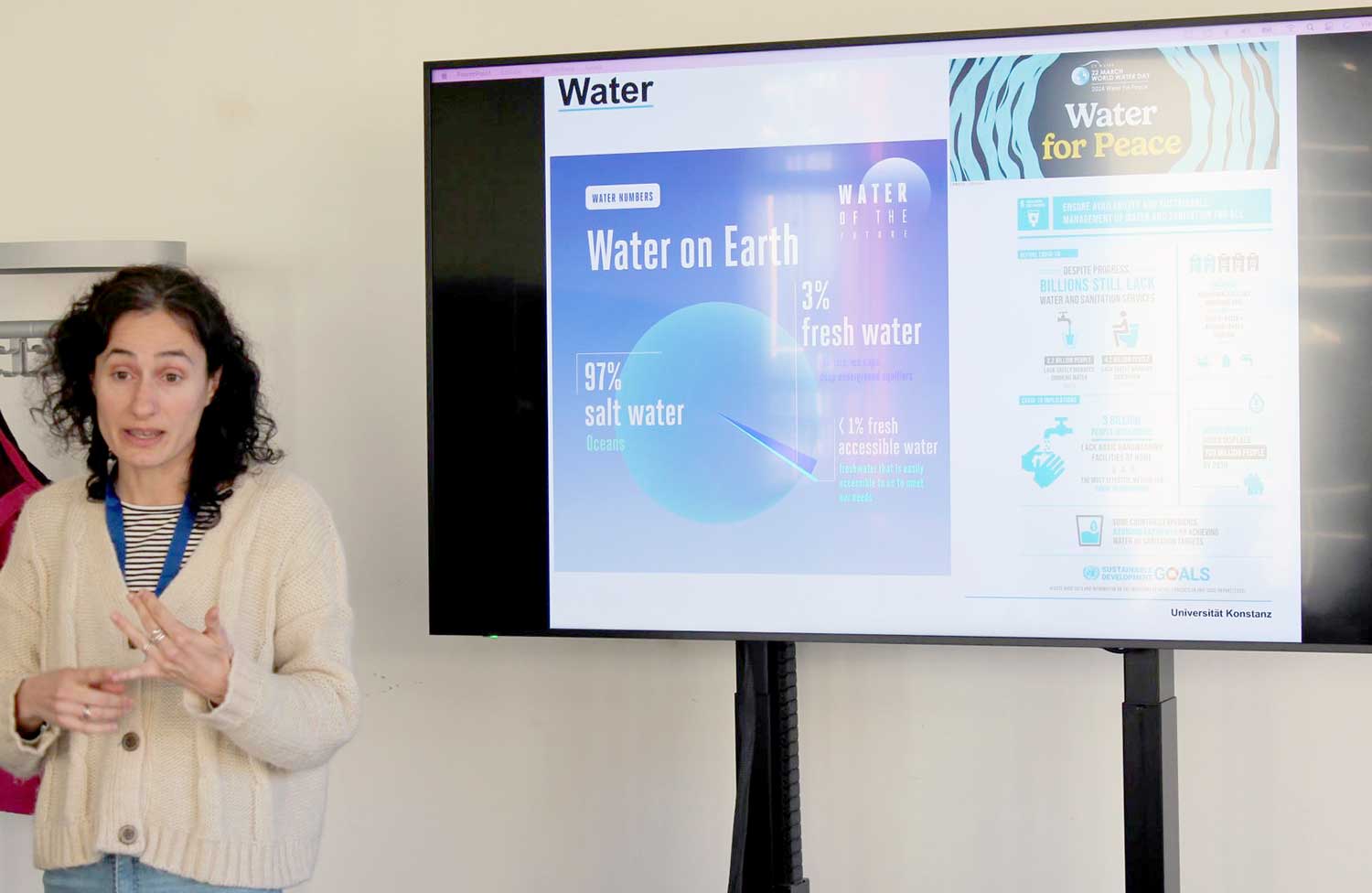
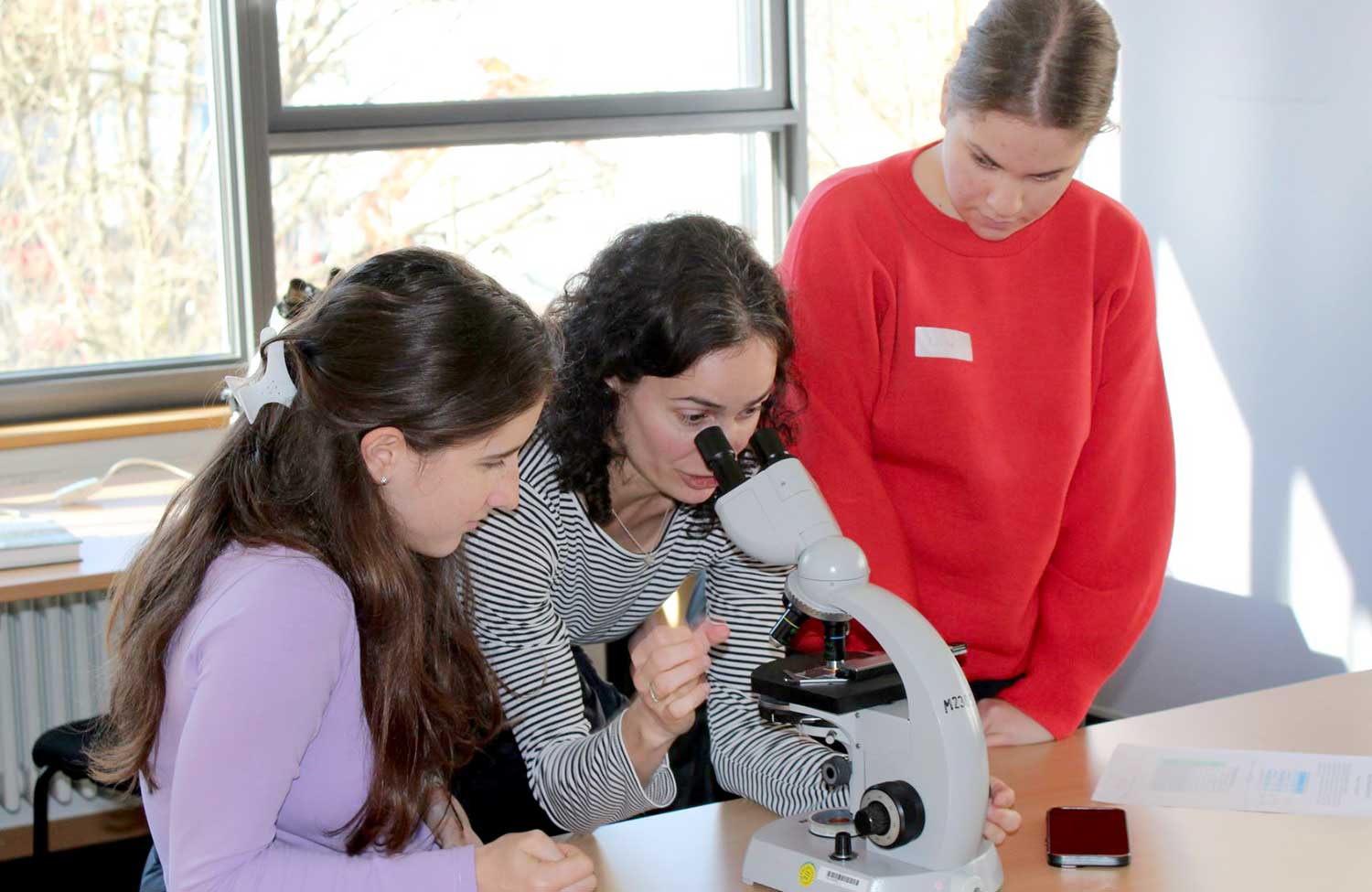
Maria Sol Porcel (from Argentina / Department of Biology) held a workshop about “Sweetwater Fish”. First, the participants learned a lot about limnology, a branch of ecology that studies freshwater systems, such as lakes, ponds, rivers and reservoirs, as well as the interactions between aquatic organisms and their environment. Like oceanography, limnology is a highly integrative science where physics, chemistry and biology interact. The basaltic plateaus of the Patagonian Steppe (southern Argentina) are the site of numerous lakes that differ in limnological characteristics and are the breeding habitat for endemic and critically endangered aquatic birds. In recent years, these lakes have experienced reduced water levels, shifting from a clear-vegetated to a turbid state. Exotic fish have also been introduced in naturally fishless lakes for sport fishing.
As Maria Sol Porcel explained: “Our studies show that fish have impacted local environmental conditions and plankton communities, which are the most severe during dry periods. Ecosystem metabolism links environmental factors and food webs by regulating matter and energy flow through carbon production, consumption and decomposition. As both reduced water levels and fish may shift metabolic processes, our goal is to quantify these processes (primary production and respiration) in shallow lakes in summer using high-frequency sensors. It is essential to understand the carbon cycle and the role of these ecosystems in the carbon cycle and predict ecosystem response to climate change.” The goal of her workshop was to provide an overview of limnological research, including sampling methods, and to explore the diversity of freshwater communities. She focused on the lakes of the Patagonian Steppe, examining their unique ecological dynamics and discussing key conservation challenges.
Autism from an interdisciplinary perspective
Cinthia Misaka (from Brazil / Linguistics) and Antonieta Martinez (from Mexico / Psychology and Computer and Information Science) held a workshop entitled “Unlocking Autism: Step into the Neurodivergent Mind”.
They gave an introduction to the cognitive, neurological and linguistic traits of individuals with Autism Spectrum Disorder (ASD). Students were able to explore key aspects of neurodivergence, gaining insights into how language and communication differ in people with ASD. Through interactive, hands-on activities, the participants experienced what it feels like to navigate social situations as a neurodivergent person. For example, the students performed a communication task – such as retelling a short story or sharing a personal experience – while simultaneously being exposed to overlapping background noises or conversations that simulate auditory overload. This activity allowed them to experience at first hand the sensory challenges individuals with ASD might face in noisy environments and understand how excessive auditory stimuli can hinder effective communication.
Robots in the swarm
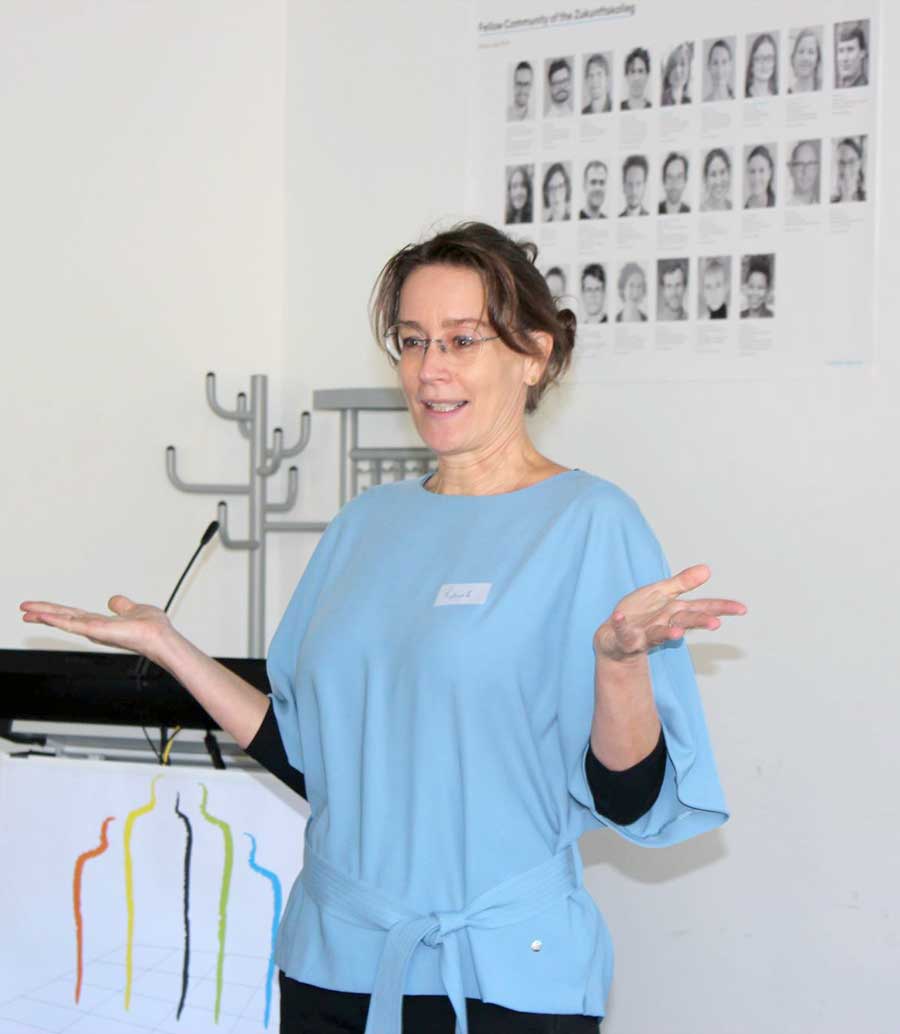
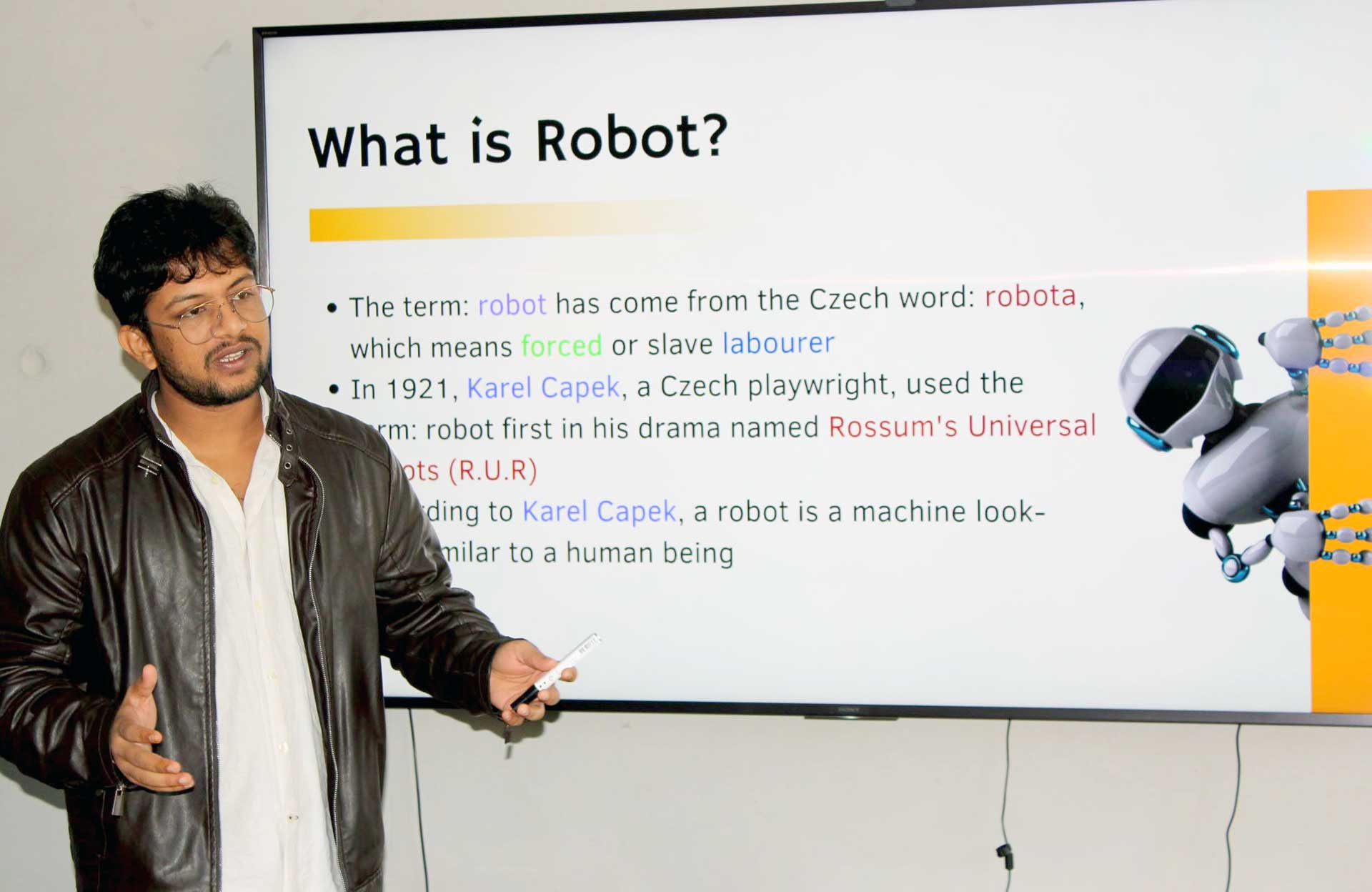
Swadhin Agrawal (from India / Computer and Information Science) discussed with the school students “What is Swarm Robotics?”.
He made clear: “Robots are more than just machines. They can sense their surroundings, interpret and process the environment, and perform tasks. Robots are ubiquitous these days, especially ones such as self-driving cars, autonomous cleaning robots, drones, and many others. The basic principle that most of them work on is based on sense, plan and act.”
In the workshop, the students gained more insights into these basic principles of what a robot is and how it works. Swadhin explained: “As the number of robots is now increasing at a pace faster than ever before, we are reaching a point where each person will be surrounded by tens and hundreds of robots. In such a situation, the traditional approach of designing intelligent robots loaded with expensive equipment fails badly because we need to design algorithms considering all the worst-case possibilities, which is mostly impossible without making assumptions about robots’ task speciality. Natural collective systems, such as humans, ants or fish, have made it through many natural disasters, and they work together socially and flawlessly in the real world to achieve the desired objectives and survive. For instance, in the case of ants, each ant perhaps does not have much sense of its surroundings except for eating, lifting objects and reproducing. Still, they collectively end up foraging in a group, building nests, and so forth.”
The participants explored how such behavioural principles from the social animal collectives, such as eating, following, etc., can be adapted to groups consisting of simple and not-too-expensive robots to let them achieve autonomy at the group level while not having to plan each of their missions.
Comment from one of the pupils:
“We had a lot of fun participating in the workshop. We learnt many new things during the sessions and were able to experience what research feels like at first hand. Our leaders were incredibly kind and very patient, explaining everything to us in an understanding and accessible manner.”