Search – Explore – Classify: AI applications in archaeology
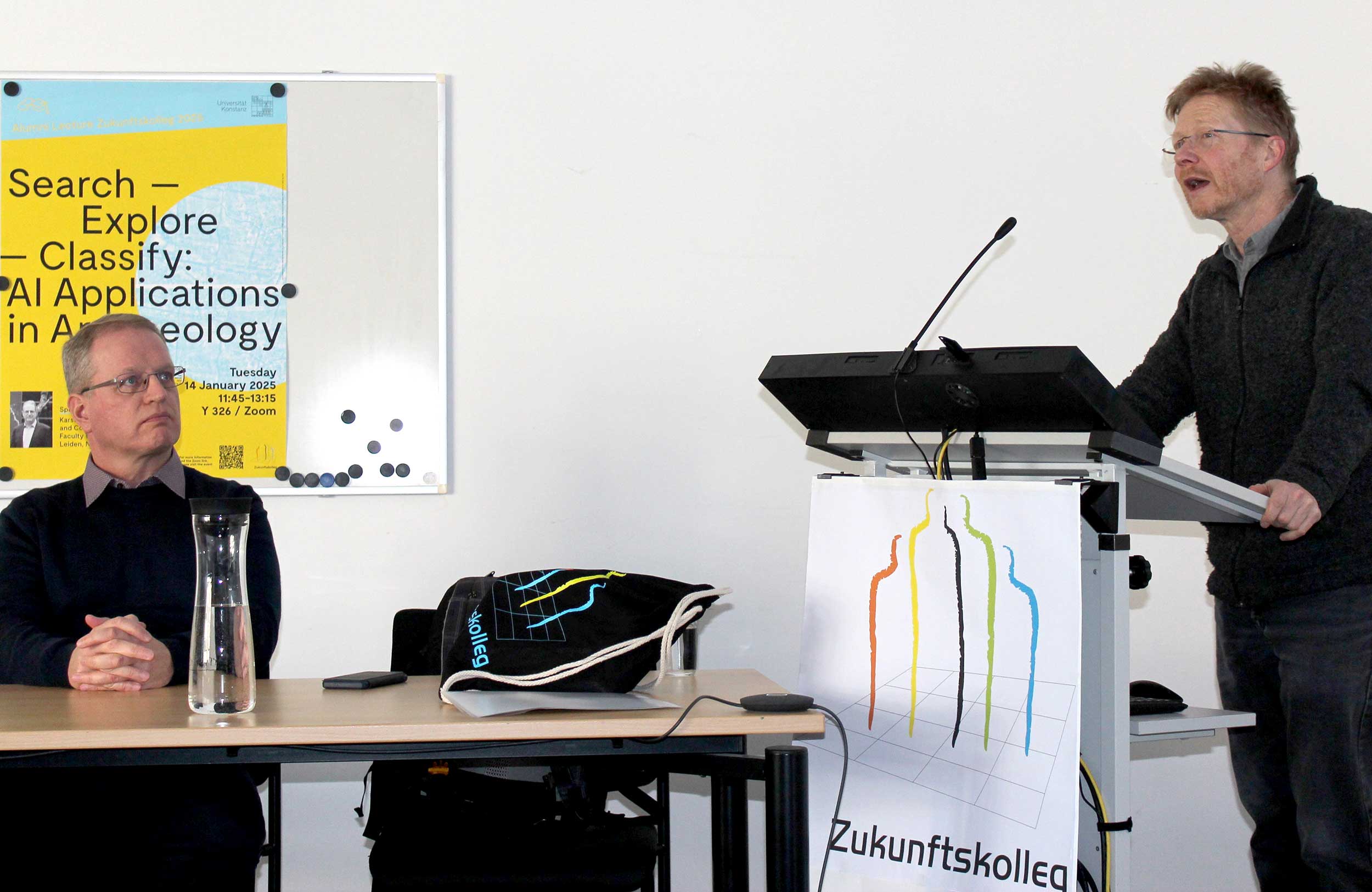
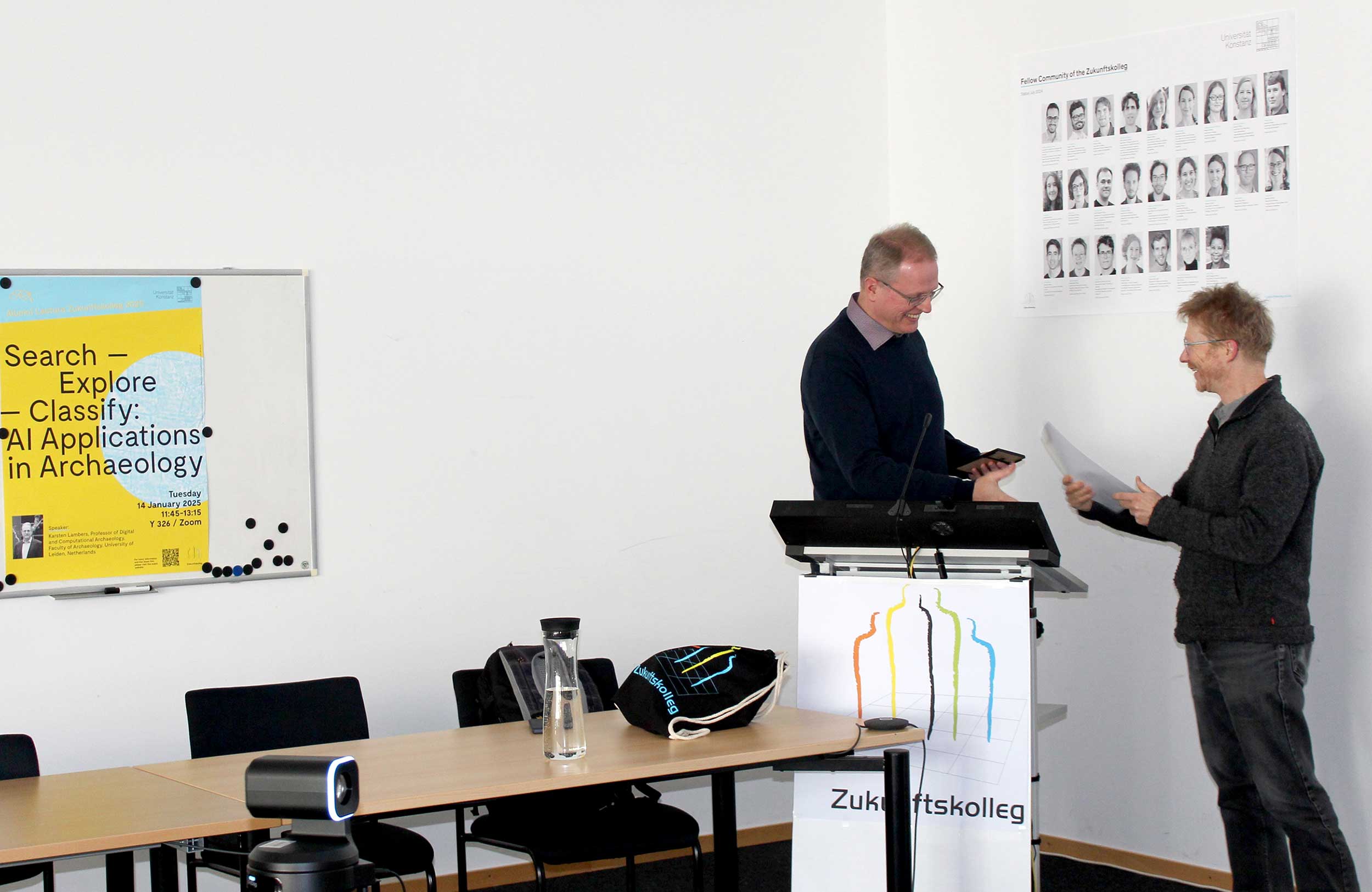
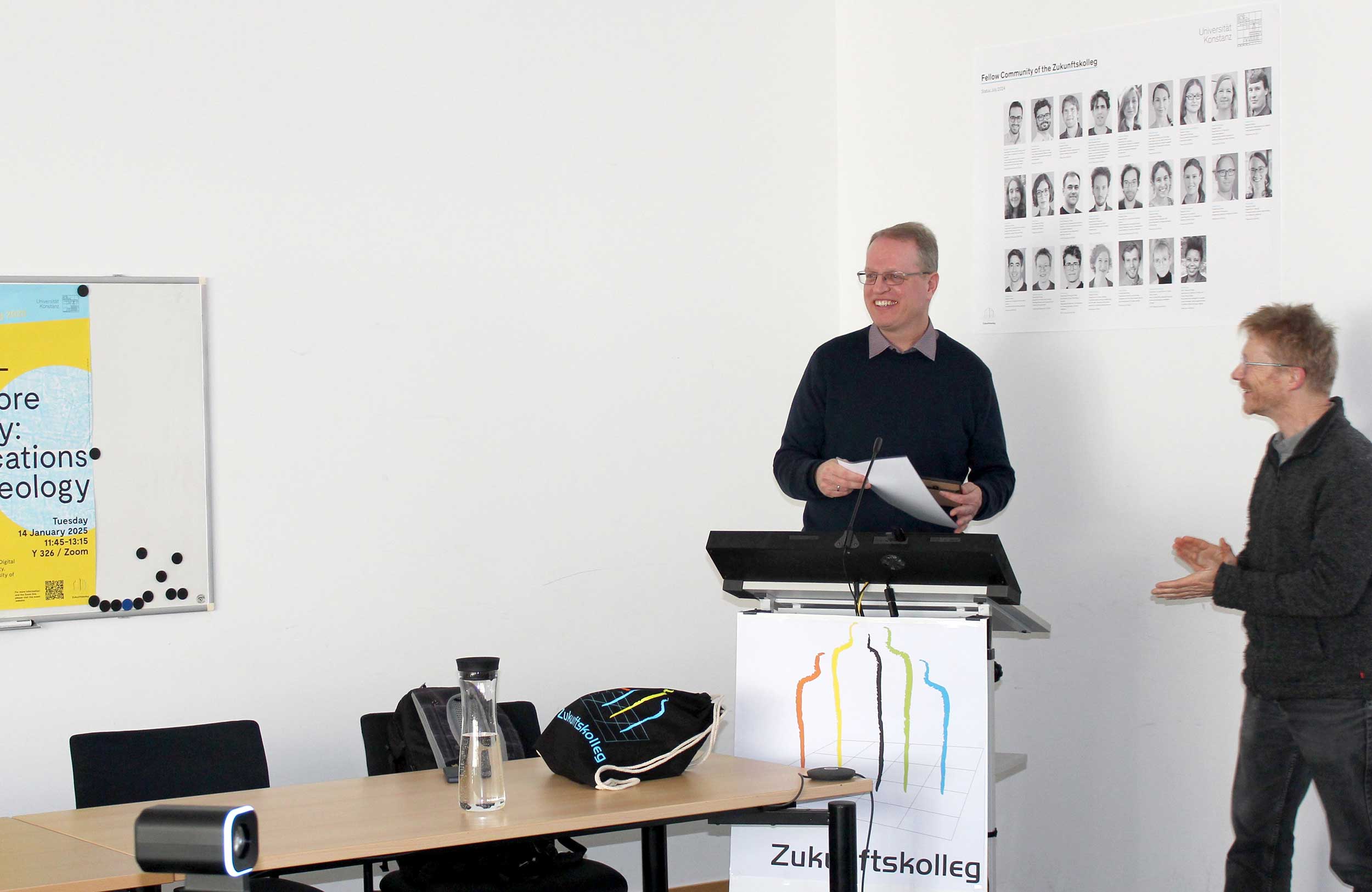
Karsten Lambers, Professor of Digital and Computational Archaeology at the Faculty of Archaeology, Leiden University, Netherlands, held the first Alumni Lecture on 14 January 2025.
The Zukunftskolleg has created the “Alumni Lecture” series to foster exchange with its alumni/alumnae and to honour an alumnus/alumna who is closely related to and associated with the Zukunftskolleg. The first to be nominated was Karsten Lambers, who was previously affiliated with the Department of Computer and Information Science and a Research Fellow at the Zukunftskolleg from October 2008 to September 2013.
About his talk
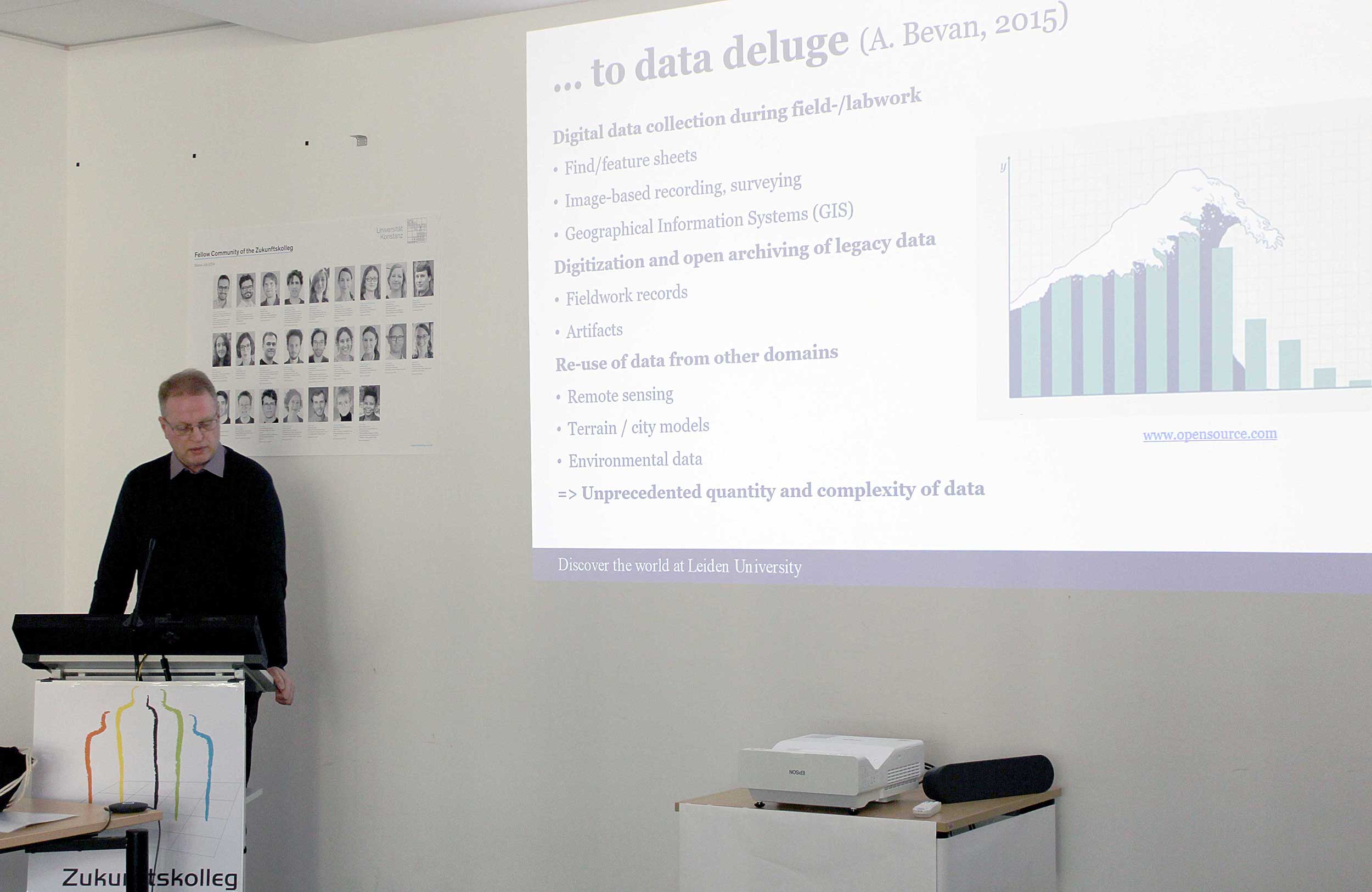
For a long time, archaeology – the study of the human past based on material remains – has struggled with data scarcity caused by the fragmentary nature of the archaeological record. Recently, however, the integration of digital field recording, remote sensing and open science in archaeological research designs has led to a data deluge (A. Bevan, 2015) that can only be managed with new analytical approaches and computational tools.
In his talk, Karsten Lambers gave an overview of current artificial intelligence (AI) applications in archaeological research and heritage management. Based on his own research, his goal was to show how domain-specific AI applications can lead to a significant knowledge gain in quantitative and qualitative terms. One example was the archaeological analysis of remote sensing data, a research line he established years ago at the Zukunftskolleg.
About Karsten Lambers
Karsten graduated in American Anthropology (MA, University of Bonn, 1998) and Prehistoric Archaeology (PhD, University of Zurich, 2005). His doctoral thesis on the Nasca geoglyphs of Palpa, Peru, was awarded the Best Thesis Award 2005 by the Faculty of Arts, University of Zurich. Further recognition of the collaborative research in which he has been involved includes two Europa Nostra Awards (2020 and 2022) and his affiliated membership of the German Archaeological Institute (DAI, Berlin, since 2022).
Before joining Leiden University in 2015, Karsten held research and teaching positions at ETH Zurich (1999-2004), the University of Zurich (2004), the German Archaeological Institute (2005-2007), the University of Konstanz/Zukunftskolleg (2008-2013) and the University of Bamberg (2010-2015).
At the Faculty of Archaeology in Leiden, he has served as chair of the Department of Archaeological Sciences (2017-2019), chair of the Digital Archaeology Research Group (since 2016) and as a member of the Research Committee (2016 and since 2023). On the university level, he is a member of the SAILS network (Society, Artificial Intelligence and Life Science) and of the steering committee of ARCHON, the Dutch interuniversity research and graduate school for archaeology.
Research
In his research, Karsten uses computational methods (e.g. machine learning) that enable the (semi-) automated extraction of meaningful archaeological entities from large bodies of digital data from different sources as a starting point for archaeological analysis and heritage management. Examples include the detection of burial mounds in remote sensing data and of archaeological concepts in excavation reports. He also studies human-environment interaction with a focus on resource use and landscape change.
Since 1993, he has regularly participated in archaeological fieldwork (survey, excavation), studying mainly prehistoric periods in Central Europe (Germany, Austria, Switzerland) and Latin America (Bolivia, Peru, Mexico). His involvement in surveying during many of these projects inspired him to explore remote sensing and digital image analysis for archaeological purposes, which eventually led to his specialization in digital and computational archaeology. In his research, he has collaborated extensively with computer scientists, geomatic engineers, geographers, geophysicists and palaeoecologists.
Teaching
His teaching deals with digital data and computational tools used in archaeology and their impact on the wider field of archaeological inquiry. He combines theoretical and practical perspectives through a mix of lectures, written and practical assignments, linking his teaching to ongoing research wherever possible. An important element of his teaching is the individual guidance of students during their thesis research.
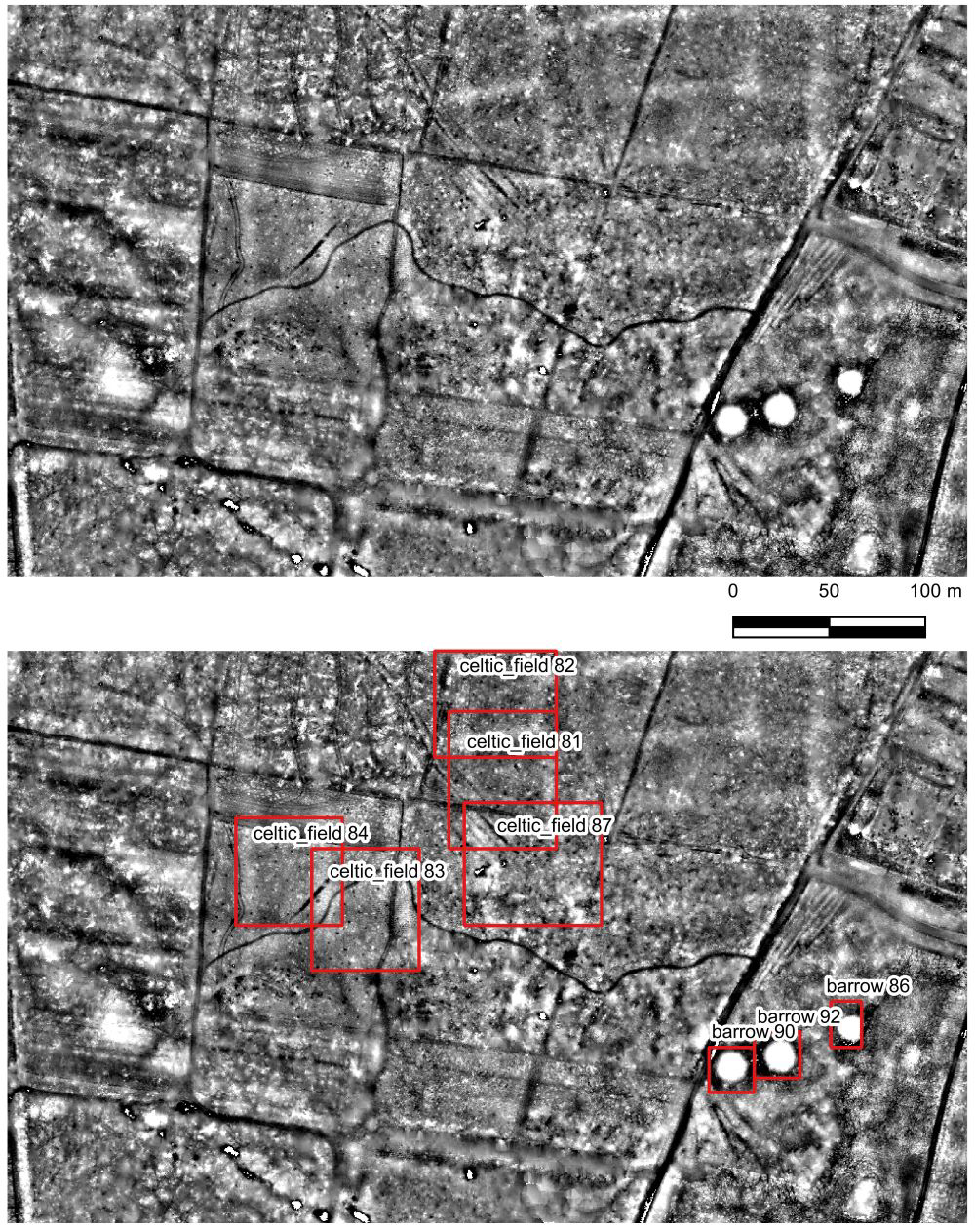
Automated detection and classification of archaeological remains in LiDAR data from the central Netherlands (Bubenzer et al. 2022, fig. 14.5)